
By Peter West · West Networks
I ran a site survey last week for a retailer opening a brand new 4,500 square foot location. Nice space. Fresh paint. Not a single data drop in the building yet.
The question he asked is the one almost every new store owner asks, usually too late in the process: how long until I have internet?
The usual answer nobody wants
Order circuit. Wait for the survey. Wait for the construction quote. Wait for the trench, or the conduit, or the demarc extension. Wait for the install window. Then find out the install window slipped.
Thirty days is optimistic. Ninety is common. If there’s any construction involved, the number stops being a number and becomes a shrug. Meanwhile the lease is running, the POS vendor needs a network, the credit card terminals need a network, and the grand opening date is already printed on the flyers.
He was three weeks out.
What we actually did
I brought a BR2 Pro 5G to the survey. It sat on a ladder in the middle of the unfinished space with the antennas pointed at the ceiling. That’s the whole install for the test.
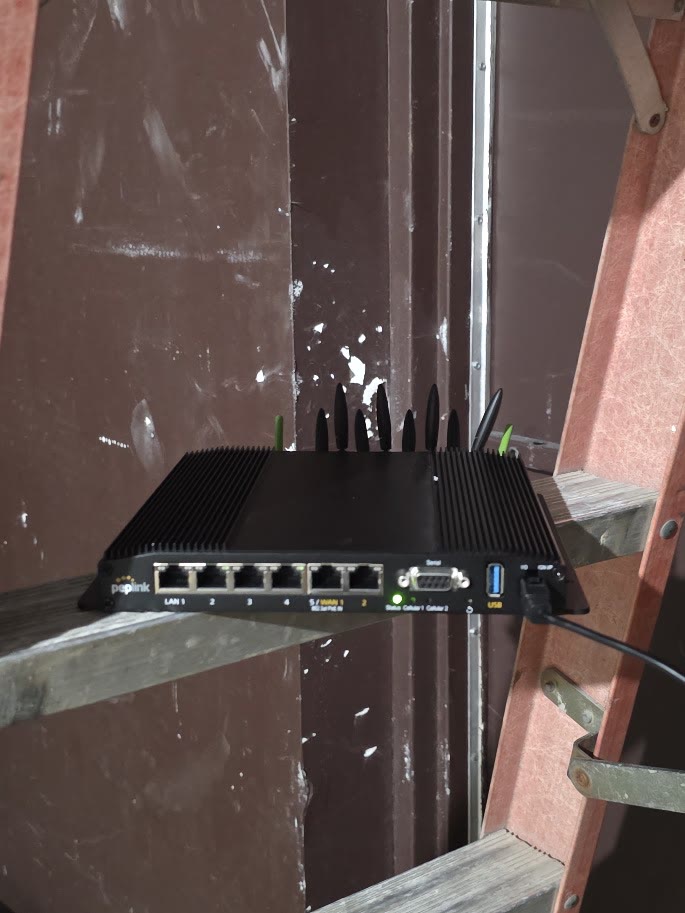
Both cellular modems came up on T-Mobile. With the two links bonded through SpeedFusion, we saw close to gigabit throughput standing in the middle of the sales floor. Not in a lab. Not on a rooftop. On a ladder, indoors, with the antennas in their factory position.
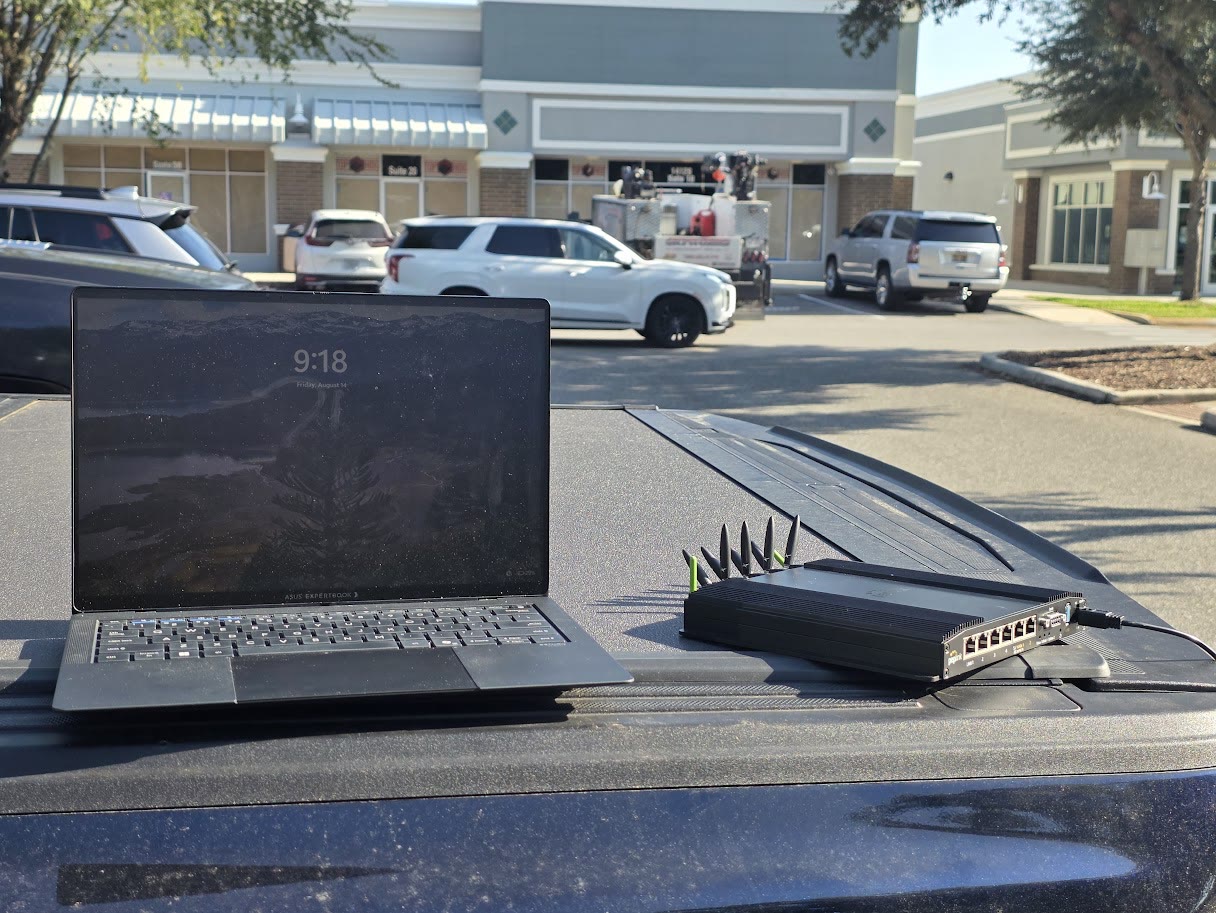
The router’s own Wi-Fi covered the office and the back of house without a single access point added. For a space this size, with the router placed centrally, that’s the entire wireless design. If he expands into the stockroom later we’ll add an AP and adopt it in InControl. Today he doesn’t need one.
Why the numbers worked
Cost is the part that surprised him. The bonded 5G solution came in well under what the local carrier wanted for a fiber circuit, and that comparison doesn’t even include the construction charge, which was the real number.
There was no construction charge. There was no install fee. There was no install window. The equipment showed up, it got mounted, and it was online the same hour.
That’s what zero-day connectivity means. Not “fast provisioning.” No provisioning. The circuit travels in the box.
The part that matters in six months
He can still get fiber. I told him to order it if he wants it, on his own timeline, with no pressure and no launch date riding on it. When it lands, it becomes another WAN member on the same router. The 5G links stay in place as backup instead of being ripped out.
That’s the difference between a temporary fix and an architecture. Most businesses buy a single circuit, hope it doesn’t go down, and discover on a Saturday afternoon that it did. This store starts with two independent paths on day one and adds a third later if the economics make sense.
What to take from it
If you’re opening a retail location, a clinic, a branch office, or anything else with a hard opening date, stop treating the internet circuit as a utility that will simply be there. It won’t be. It’s a construction dependency with the longest lead time on your list and the least control over it.
Bonded cellular removes it from the critical path entirely. You open on time. You add wired later if you want to. Nobody spends opening week on hold with a carrier.
His store opens on schedule. The network was the easiest part of the build.
West Networks is the world’s largest Peplink integrator. If you’re building out a new location and want to know whether this fits, reach out. Retail-specific guidance lives at retailconnectivity101.com.
Leave a Reply