
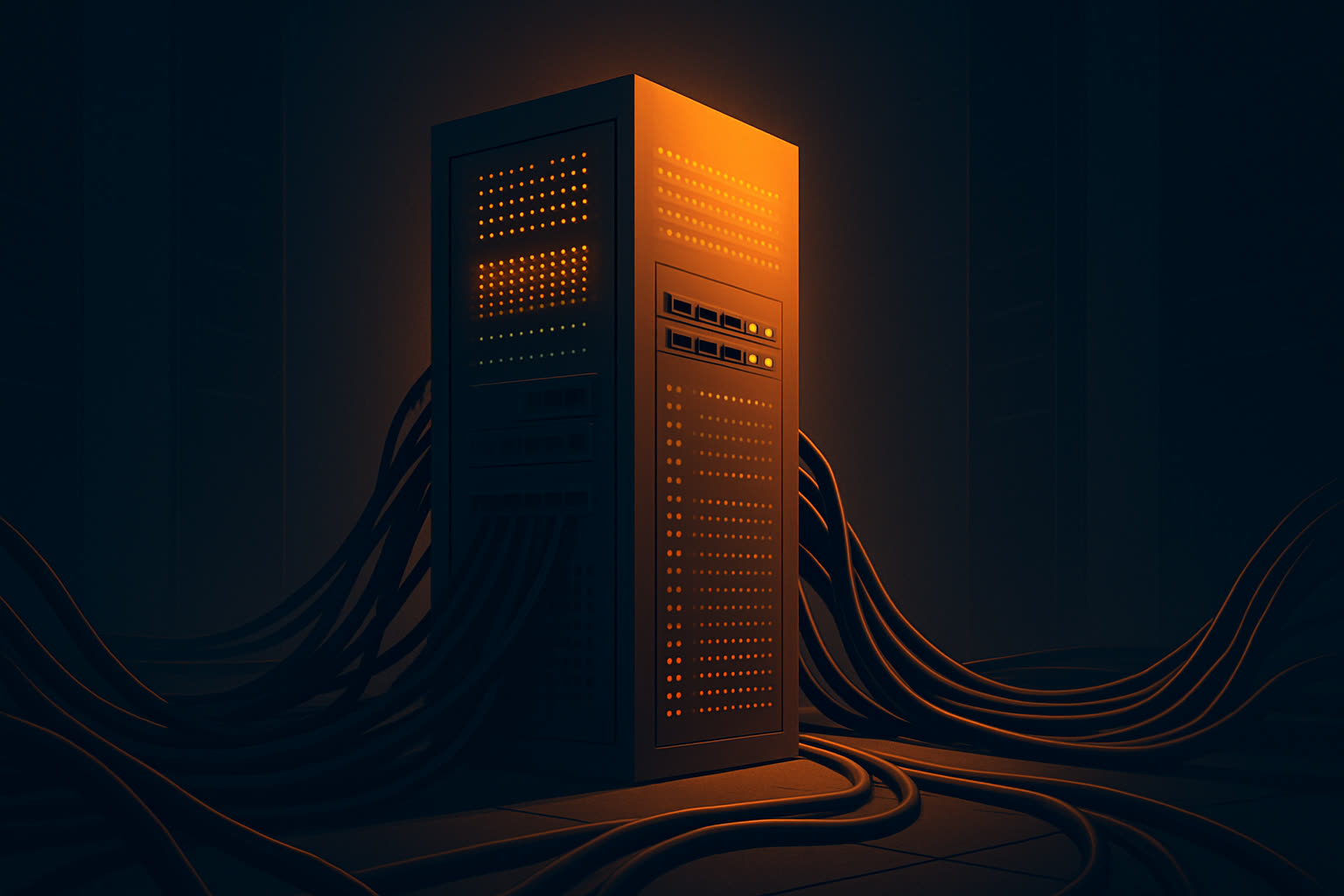
The traditional enterprise network was built around a central assumption: most of what mattered happened inside one building, or a small number of large buildings.
Under that assumption, the architecture made sense. A high-capacity Layer 3 core switch routed traffic between departments. Servers sat in an on-premise data center, generating heavy east-west traffic, machine talking to machine, across the local network. The wide-area connection to the outside world was a managed MPLS circuit, expensive but predictable, because the outside world was secondary. The real work happened on the LAN.
Security followed the same logic. The network had a perimeter, a clear inside and outside, and a firewall stood at the boundary. Everything inside was trusted. Everything outside was not.
In that world, “enterprise-grade” meant the core could do more: more routing, more switching capacity, more features, more inspection. The buyer with the most capable core had the most capable network. Feature depth was the differentiator, and the vendors who sold the deepest feature sets, the Ciscos and the Junipers, owned the category.
None of this was wrong. For a fifty-thousand-person building with the data center on site, it was exactly right. The problem is that the building emptied out.