
- BGP: import default routes, filter imports by origin ASN, and redistribute BGP defaults into OSPF.
- Static routes that resolve through a domain name.
- Fixed: OSPF routes learned over SpeedFusion no longer collide with local VLAN routes.
Peplink supports full dynamic routing and remote-user VPN under Advanced.
OSPF
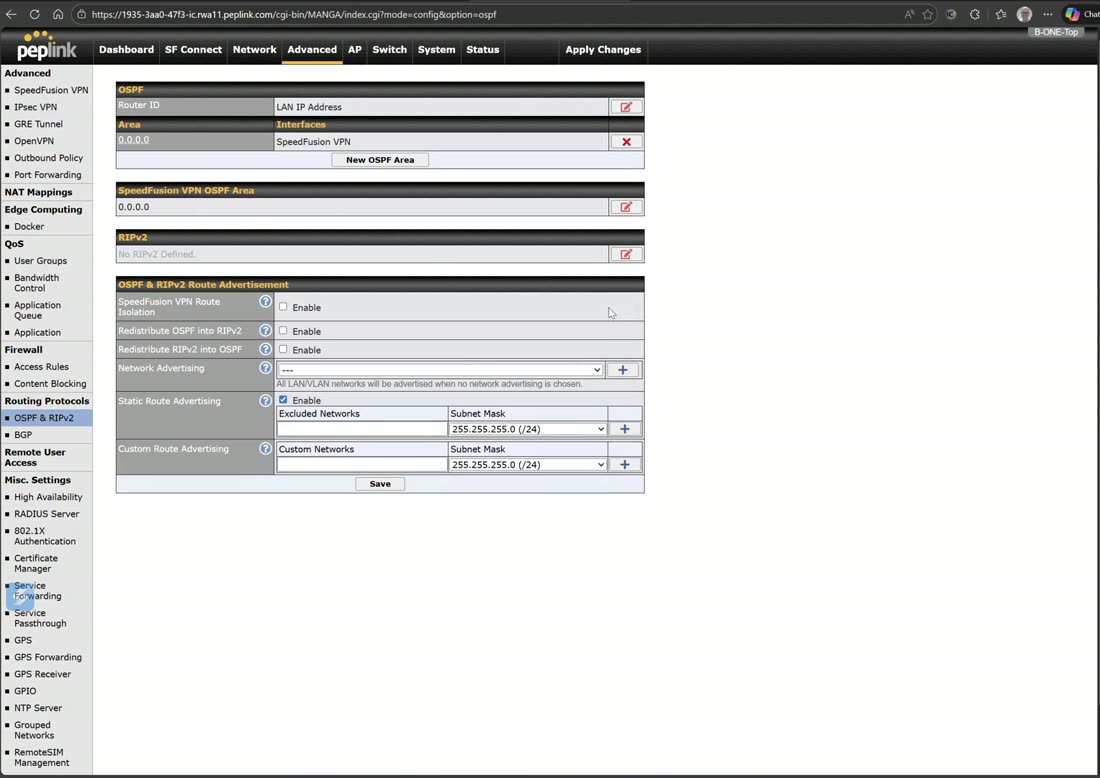
Run OSPF over a SpeedFusion tunnel. It defaults to area 0.0.0.0, where you can add additional interfaces. If you change the area (e.g. to 0.0.5.1), you must update every peer in the SpeedFusion network to the same area ID.
SpeedFusion VPN route isolation is valuable at scale: on a hub router (say a Balance 2500 with 100 remote routers) it stops the hub from redistributing learned networks between the spoke sites, keeping each site isolated. You can also translate OSPF into RIPv2 (or RIPv2 into OSPF).
Network advertising is powerful — advertise only untagged LAN (so you do not push your guest VLAN across the whole infrastructure), plus static-route advertising, excluded networks, and custom advertising where you add specific subnets to advertise or exclude.
BGP
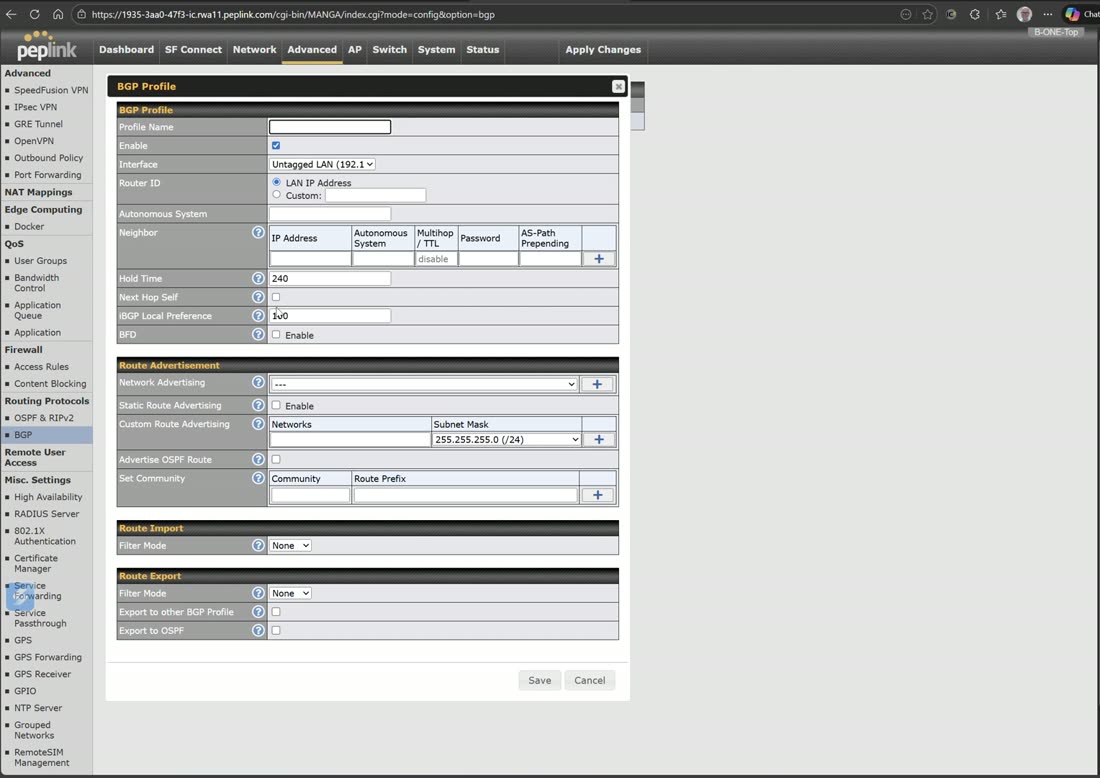
Full BGP is supported. Peter’s preferred multi-WAN pattern: peer BGP on the WANs but set route import to reject all — as a multi-WAN router he does not care which paths he learns. He rejects the default 0.0.0.0 traffic, then builds a Fastest Response outbound policy so every session is analyzed per-WAN and takes the fastest path to its destination. The matching route-export controls what you advertise back out.
Remote user access
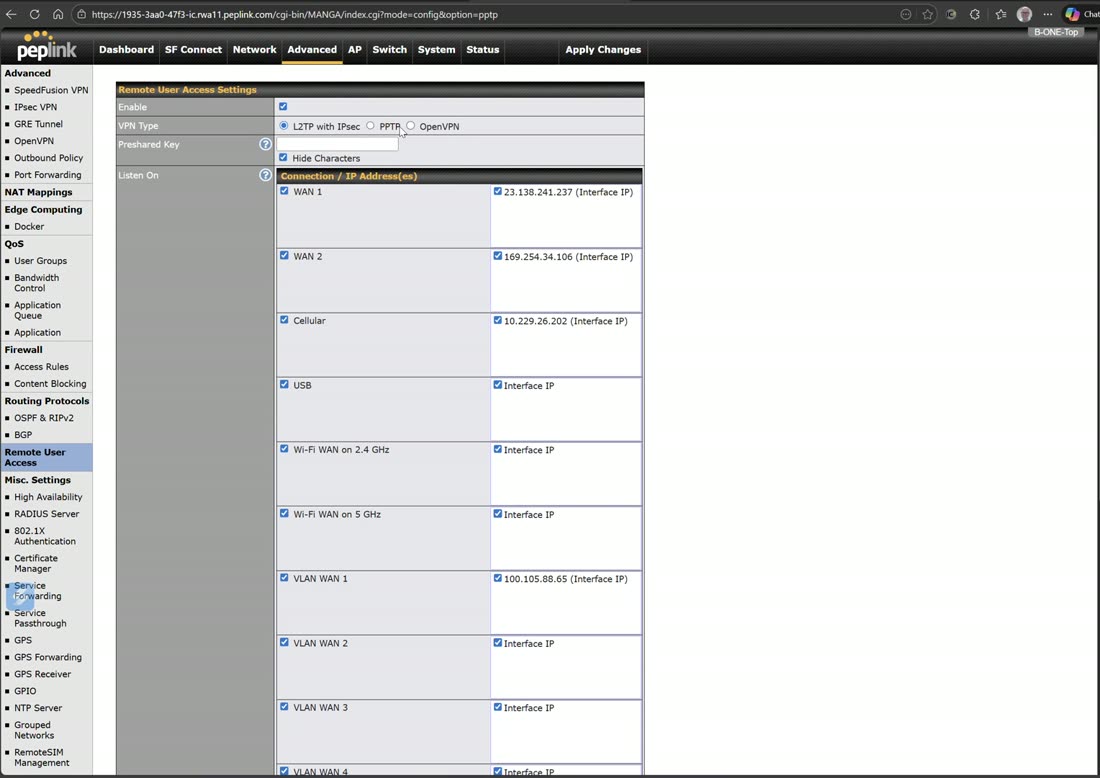
Turn on L2TP/IPsec or OpenVPN and save/apply. From the status page you can download the client profiles, select the WANs and port, and choose which VLAN users land on (you can even create a dedicated VPN-users VLAN). Optionally include OSPF routes so remote users learn the internal routing, then authenticate against LDAP, RADIUS, or local users.
Watch: related training videos
- Support | Route Advertisement (Peplink University, 16 min)
- Browse the full Video Library →